Showing posts with label Acceptance. Show all posts

Monday, February 1, 2021

My Vision For The World, and How You Can Help


By Christine Clinton


When I was growing up, I didn’t at first realize I was different in any way. I had countless doctor appointments, and countless surgical procedures; but I always thought that was the norm. I had to go to a special school the first five years of my life, because the school my sister was attending, decided they could not accept me as a student. The principal of the school that my sister was attending told my parents that, “if I accepted Christine into this school, I would have to accept other children like her.” I will admit, those words still sting to this day.

So, because of that principal’s decision, I went to a special school. My parents were persistent, though. When I was going into the fifth grade, they were able to fight to get me out of the special school, and mainstreamed into my sister’s school.

I was elated, because I felt like I was going to have a sense of normalcy. I thought that being around other children who didn’t have the same adversities and limitations that I did would help broaden my horizons, and eventually, add to my maturity and growth. Being in the fifth grade at my sister’s school was absolutely wonderful. Everyone absolutely loved me – from the other students in the class, to the teacher. I felt unconditionally accepted and loved. Nothing felt like it was fake or strained; it was just beautiful.

Unfortunately, due to not being properly taught in the special school, I had to be put back into the fourth grade to learn some things I’d missed along the way. The last day of my time in the fifth grade was a very tearful one, and I still remember to this day. I hated leaving the caring, accepting, compassionate class that was so full of gentleness, kindness, and unconditional love. While I don’t remember the names of every single person in that fifth-grade class, I will forever carry the memory of that special group very deep in my heart.

Going back into the fourth grade was starkly different than being in the fifth grade. The respect and dignity I experienced in the fifth grade evaporated instantly. As soon as I entered the fourth-grade room, I was bullied. One girl’s unwillingness to accept the way I looked on the outside, led her to tell everyone else in the class to avoid me. I only had two friends in the fourth-grade class: my best friend whom I have known for almost 34 ½ years, and my sister.

I was called every name under the sun; most I don’t want to repeat, but I urge all of you to never use the word “retard.” It is like a weapon that still cuts me when I hear it.

Those days at school were horrible and hurtful. No one should ever have to be subjected to that kind of cruelty or unkindness, no matter how they look. The bullying, unfortunately, didn’t stop once ignited. It seemed that nothing could overcome the raging fire that one girl started. Thus, the bullying continued all the way into the eighth grade.

Sadly, I was hopeful (or maybe foolish) to think that things would get better when I went into high school, but no; things were the same… if not worse. It seemed I could not escape the stigma she had put on me – a stigma that up until that point, I had not felt on myself.

It wasn’t until my college years, when a very kind security guard told a bully who I encountered in college to “leave me alone.” He intervened and announced “I was under his protection.”


My plea to you reading this, is to understand that one unaccepting person can create a trend that long outlasts her effort. It was not until an “upstander” – the security guard – intervened, that things changed. You see, you have the power to start a negative or positive trend. Who do you want to be? The fourth-grade bully? Or the security guard hero?

Even as an adult, there are instances where I have been bullied. This time though, the bullying isn’t just because of how I look. It also encompasses my emotions, opinions, and feelings on different things.

We all have our own emotions and feelings, and differences of opinion. These differences are absolutely healthy! It is natural to have different viewpoints.

What is never okay, is to make others feel like only someone else’s viewpoints matter, and how they feel doesn’t count. That is simply not right. We all deserve grace, and the opportunity to express how we feel, as long as it isn’t in a cruel, derogatory, or unkind way.

No one ever deserves to be bullied. How truly boring our world would be if we were all the same, if we all acted the same, looked the same, and had the same ideals and viewpoints? We are all different, and we all deserve the very same dignity and respect no matter how we look.

My wish is that no one is ever bullied. I wish we could all look past the exterior shell, and see the heart and soul of a person. I wish we all had the ability to accept one another as we are, instead of what society wants us to be. If we could all just stop categorizing one another, and putting labels on people, what a wonderful world it would truly be.

In closing, I would like to challenge you, Reader, to combat bullying. Combat the hostility that people with craniofacial and physical differences have to face every single day of their lives. If you are with someone, and they are being bullied, stand up for them. Intervene and speak up! Let them know that they are never alone in how they are being treated.

Help them by talking to another trusted family member, or friend, about the bullying incident. Never let the person being bullied be made to feel so alone. Instead of spreading unacceptance, and unkindness, of people who look different, let us instead spread unconditional acceptance and love for all. I promise you, the wonderful feeling you get when you know you have given someone a chance to be your friend is absolutely amazing. It is truly rewarding for a person who is different to know they will always be unconditionally accepted and loved no matter what. You can change the world, if you take on this challenge!

Monday, September 23, 2019

The Mighty #52SmallThings Challenge is Acceptance for #CAM2019

Wednesday, May 1, 2019

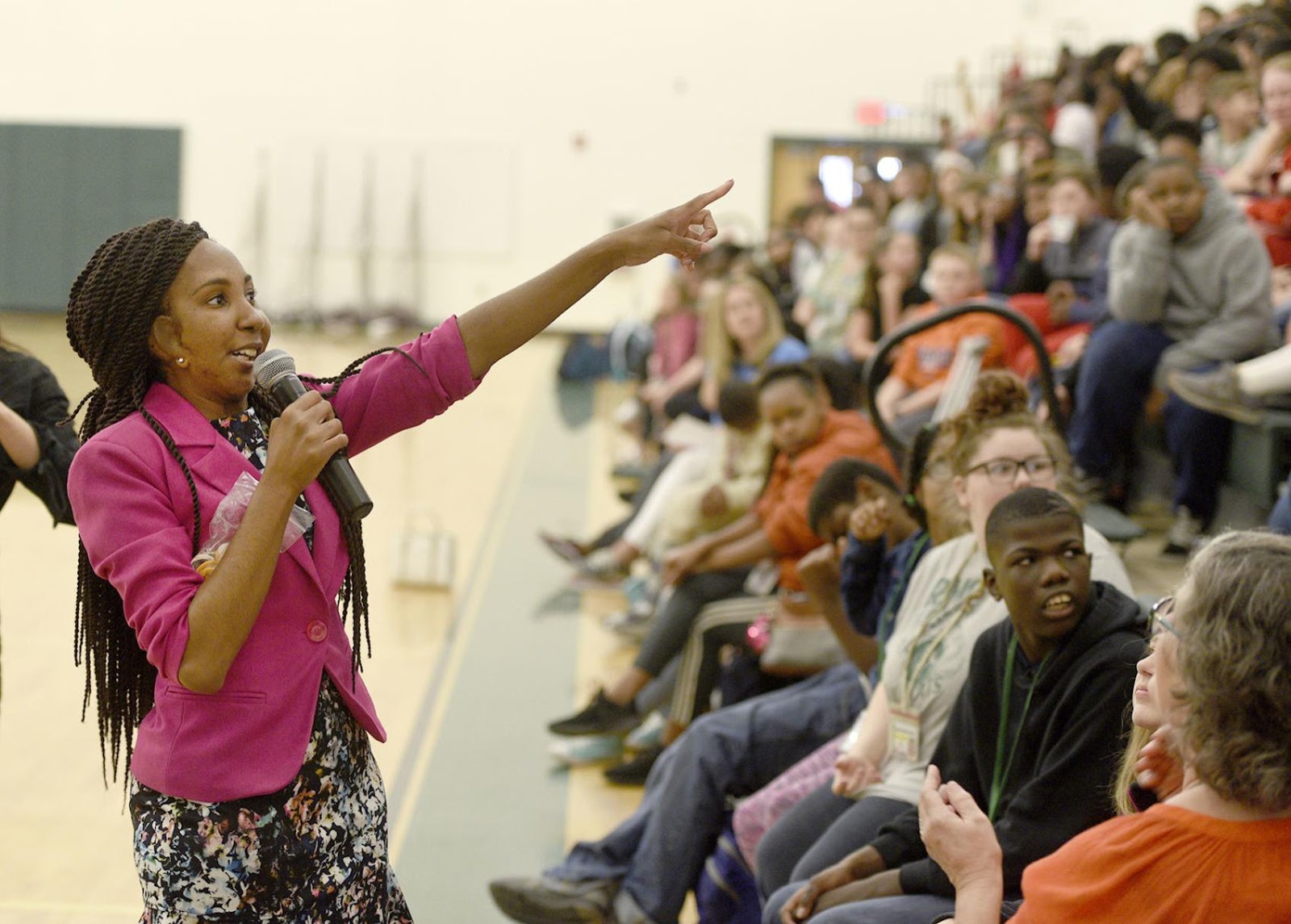
#WonderWednesday: Rasheera Dopson Inspires Georgia Students

Photo Credit: Bobby Haven, The Brunswick News 
Rasheera drove four hours to share her story with over 250 middle school students at Risley Middle School in Brunswick, Georgia. She spoke about living with and advocating for people born with facial differences like her. Rasheera was born with Goldenhar syndrome. Her words were "inspiring and kept our students engaged throughout her entire presentation," said one Risley Middle School teacher. 

In honor of Rasheera's visit to their school, students held a lucrative "penny war" where they raised $500 for CCA. We are all so grateful for Risley students' generosity.

Not only were the teachers and students impressed, but the local newspaper covered Rasheera's stirring story, too. They also took some amazing pictures of Rasheera in action as she worked the packed gymnasium of students who recently read the book "Wonder" by R.J. Palacio.

Many are reading Palacio's New York Times bestselling book, which was made into a film in 2017. CCA urges schools, teachers, church groups, Girl Scout Troops, and others to contact them to recommend a speaker that lives near them. 
We also have a number of lesson plans for "Wonder" and curriculum for other grade levels that accompany other books on empathy, anti-bullying, and kindness. You can learn more about all these educational offerings on our website under the "Educators" menu tab. 

Sunday, April 21, 2019

You Name It. I Overcame It: My Final Crouzon Surgery


Editor's Note: This article written by Ysa De Lauro was originally published in her student newspaper for their features section series "You Name It, I Overcame It." She shares with us one of the last major surgeries she had and how she made it through with a smile on her face and courage in her heart. 

By Ysa De Lauro

Be Brave. Be Strong. Be Fearless. These words are embroidered upon an artsy throw that my family gave me. These are six simple words. Together these phrases produce quite a motivational message. My name is Ysa, and I’m a junior here at South. Like most teenagers I have had my share of challenges. Mine include being born with Crouzon syndrome, having severe to profound hearing loss, and struggling with typical insecurities like doing well in school and finding the right college.

Well here is my story. Waking up the morning of December 13th was exciting. I had waited patiently for seventeen years to come to the end of my series of surgeries. This surgery marked a milestone. I counted it as my eighteenth and nineteenth surgery. What this day meant to me was that I was almost done. I was relieved and excited. Surprisingly for such a major surgery, I wasn’t nervous. I was energized and eager. At seven in the morning, we headed to the hospital. It was my mom, my dad and me. We checked in the hospital. Ironically, I had just been there eight days before due to an endoscopic nasal surgery. That was a simple procedure compared to this one.

I waited patiently. I was all smiles anticipating the outcome of this day. They called me back to presurgery, took my vitals and added another two bracelets identifying me and my allergies. I changed into a pale blue hospital gown and dressed my feet into fuzzy cat socks, which I got plenty of compliments from. I met with the administrating nurse that gave me a synopsis of the two upcoming procedures. The first was a tumor on the right side of my forehead that resulted from a surgery when I was two. There was a hole in my skull, which the neurosurgeon would repair and use a bone graft from skull. My second procedure was a midface advancement of twelve millimeters. This would drastically change my bite and overall appearance. Altogether, these procedures would take approximately nine hours.


Shortly afterwards, I had two IVs (in the vein) and one arterial line (in the artery) administered. This to me is the most stressful and scariest part. I absolutely hate needles! So to me the worst was over. Well, kind of. Now, I was wheeled off to surgery. This is what I remember from that day.

However, ask my parents their version of this story and they would have a very different one. My parents would sit in the waiting room, worrying and anxious. After the first hour or so, my craniofacial specialist came out to inform them that the first surgery was going well, but and here is the but, the neurosurgeon insisted that they would have to shave my head. This was devastating news to them as they had no prior knowledge and greatly feared my reaction.

My hair had been my pride and joy. I used to love styling it and I used to love buying new products that changed the texture of my hair. It was something I looked forward to every morning, deciding what hair style I would wear for the day. My mom asked me while in the hospital if I wanted to wear a wig, but I said no. Because the girl with the long hair was gone. Because I realized that I didn’t need to hide behind my hair anymore. Because after looking at myself for the first time in the mirror at the hospital, I didn’t see myself. Instead, I saw this beautiful, strong, confident young woman that wasn’t afraid to show the world who she was. My short hair exposed all of my scars from my previous surgeries, so I was able to show the world all of the battles I have fought. This surgery has helped me find my inner beauty.

Then the second punch in the stomach, if the craniofacial specialist couldn’t advance my midface out enough, they would need to attach a metal contraption called a halo. This would be an external device that I would wear for approximately three months. I had this when I was five. Again, this was the first time that this was discussed. So my parents agonized over the news and did their best to be patient and calm. The neurosurgeon eventually came out with the news that the first procedure was complete and successful. So now it was the craniofacial specialist’s turn. The incision was ear to ear (kind of like a headband across the top of the head) and he was to cut through my midface, free it and advance it twelve millimeters. He would align my teeth and then set everything in place with four titanium plates.

Somewhere during this procedure, another specialist entered the picture. It was the ENT. When the craniofacial surgeon exposed my nasal cavity, he had retrieved the ENT. It was only eight days prior that the ENT had attempted to remove a polyp that was in my left cheek. He had been somewhat successful, but was unable to remove it entirely. Well with the cavity exposed, the ENT removed the entire polyp. This was a bonus and meant that I would not have to proceed with the surgery that was tentatively scheduled for the upcoming summer. The surgery ended about nine hours later. All three procedures were successful and now the tough part: recovery.

Still unconscious, I was wheeled into ICU. The plan was that they would keep me unconscious for several days. The thought was that they could control the pain and give my body a chance to start healing. Well, that was the thought. However this was not the case. During the night, I became quite agitated. The night nurse said that was common. At 5:30 a.m., I began to gesture and my dad immediately stated that he thought I was trying to write something. Understand that my eyes were swollen shut: I was hooked up to a multitude of machines. There was a main drain coming out of my head. In addition, I was intubated (meaning I had a huge tube in my nose to help me breathe) and my mouth was fastened shut with heavy rubber bands that were attached to my braces. I had no way of communicating. My dad rustled up a paper and pen. I wrote, “I can’t see.” The nurse was astonished as were my parents as I was to be in a sedated state with no recollection. Obviously this wasn’t the case. I was aware of what was happening. Actually I feared that I might be blind. My parents later admitted that they shared those fears.

So this was the beginning of several stressful days. My pain was regulated by an endless series of medication. I communicated my concerns and fears through pen and paper. I wrote, “Will I ever get better?”, “No more surgeries. It hurts.” and “Are we leaving today?”. I struggled with the idea that I wouldn’t be able to see (my eyes were extremely light sensitive) and swollen shut. They attempted to extubate (remove my breathing tube) without realizing it was sutured in. One of my IVs was compromised so my hand literally blew up the size of three normal ones. Then I came to the realization that my hair was gone. My head was wrapped up. My parents said they were dreading this conversation, but was amazed at my calm reaction and grace at this news.


So fast forward, five days. Four days in ICU and one day in step-down ICU, and after some serious pleading, I was discharged to go home. Life was good. No, life was great. I was going home. I had severe swelling in my face, my mouth was fastened close, and numerous scars exposed from this surgery and the past. I was the spitting image of the character Eleven on Stranger Things. I was scrawny (living off of liquids which I ate through a syringe), had a fresh crew cut (thanks to my neurosurgeon), and a constant drainage of blood through my nose.

So why am I sharing this story? What did I take away from this experience? I learned that my hair didn’t define me, even though previously it had been my pride and joy. I learned that my family, my friends and my supporters are truly precious. I learned to be strong and stand tall when faced with constant questions and stares. I learned that by sharing my experience, I have encouraged others to find their own strengths. I have learned that I can endure. I have learned that I am indeed, strong, brave and fearless. I am hoping that you too will learn that you are stronger than you realize.

Tuesday, April 2, 2019

30 Stories 30 Faces 30 Years: David Roche


David Roche with his wonderful wife, Marlena, at an Indianapolis speaking engagement 


“As a child I was alone with my face. At my first CCA Retreat, children jumped with joy. I too became a child, shared their joy, and felt incredible healing.”
           
                               David Roche, Roberts Creek, British Columbia

David Roche is a performer, humorist, author, and inspirational speaker that lives with his wife, Marlena, in Roberts Creek, British Columbia. He enjoys working with students of all ages as a motivational speaker. In 2018, he appeared in the film “Happy Face,” by french filmmaker Alexandre Franchi.  David enjoys spending each day with the love of his life, writing his next book, all while watching the cedars outside his window sway.

Tuesday, August 7, 2018

Help Celebrate Craniofacial Awareness Month, Kickoff Dallas Sat., Sept. 8th


Dallas, TX -- Children's Craniofacial Association celebrates its 14th annual Craniofacial Acceptance Month this year and you can be part of the fun. CCA will host a Dallas-area picnic on September 8th. We encourage our families to host awareness events in their home cities spanning across the United States during the month of September. CCA hopes that you will share your stories and spread the word about our courageous kids through your local newspaper, TV, and radio stations.

Many kids with facial differences, empowered by the movie and New York Times-bestselling book, Wonder, eagerly want to share their “real Wonder” stories with the world. You can help them reach the goal by giving them access to your media platform. If your newspaper, television or radio station covered one of our CCA kids’ stories during the premiere of the movie “Wonder” or for last year’s Craniofacial Awareness Month, please consider following up with the family. Here is a list of links to stories that received news coverage last year https://ccakids.org/real-wonder-stories/

The Dallas-area picnic is our kickoff event signaling the beginning of the month-long celebration of
everyone in the craniofacial community. Sandy Lake Amusement park in Carrollton, TX will host the
picnic on Saturday, September 8th from 11AM - 1PM. This year a barbeque lunch will be provided. The event will feature games, a D.J., free amusement rides, and time for families to connect and meet children with craniofacial conditions.

Dallas CAM Picnic 2017
Children’s Craniofacial Association (CCA Kids), a national nonprofit headquartered in Dallas and founded in 1989, worked for over 27 years toward the vision of a world where all people are accepted for who they are, not how they look.

Each year approximately 50,000 children in the United States are born with or develop some form of
facial difference (previously called disfigurements). In many cases, reconstructive surgeons can correct these problems early—often while the children are still infants. In other cases, however, reconstruction is not so easy or even possible. To assist these families, CCA offers programs and services including Patient Financial Assistance, the Annual Family Retreat & Educational Symposium, and kindness education and bullying prevention programs in middle schools across the country.

Children's Craniofacial Association, a 501(c)(3) nonprofit organization based in Dallas, Texas and founded in 1989, serves over 20,000 families per year and an additional 10,000 unaffected students in schools across the country. CCA's mission is empowering and giving hope to individuals and families affected by facial differences. CCA envisions a world where all people are accepted for who they are, not how they look. Learn more about at http://www.ccakids.org.


Monday, March 12, 2018

#NewsDayTuesday: Learning About Body Image Through Kids Born with Facial Differences


An article published on The Conversation, "an independent source of news and views from the academic and research community, delivered direct to the public," outlines important psychological findings about children born with facial differences. Thankfully, most are positive revelations. Those with facial differences were found to be more mature and accepting of their bodies. Read more in the article to reveal the research that supports these theories.

Three cheers for resiliency and leading the way towards self acceptance.


Tuesday, December 12, 2017

#WonderWednesday: New York Elementary School Creates Wall of Wonder


The fourth graders at the Nassakeag Elementary School created a wall of "Wonder" featuring their guidance on how to #ChooseKind. The teachers and students took the opportunity to write their own precepts to make a powerful display at their school after reading the book thanks to excellent curriculum development by their teacher, Miss Donato. It is so heartening to see the impact that the book has on children. One school classroom at a time, the book positively impacts the hope for kindness in the present and future. Thank you Nassakeag Elementary. Keep up the great work.

To read more about this story, go to the Three Village Patch.


Wednesday, November 15, 2017

#WonderWednesday: Washington Post: Girl Tells Wonder Author What Book Means to Her


Reading can help us make sense of our world. I do not know what I would do without the information and escapism books provide. They can help you enhance your mind or boost your mood taking you to far off lands away from from the rigors of daily life. 


The book "Wonder" enhanced Clair Juip's life in immeasurable, powerful ways. The power came from the book "Wonder." The New York Times best-selling book, written by R.J. Palacio, helped Clair Juip better understand her and her brother's struggle with a rare disease called, Friedreich’s ataxia, which affects the nerve cells in the body. The characters of Auggie Pullman, and his sister Via, in Palacio's book helped Clair make better sense of her own reality. After entering an essay contest, Clair had the opportunity to meet the author in September. Watch the video in this link for more details on this story.  


Monday, September 25, 2017

More Excerpts From the Our Altered Life Blog By Charlene Beswick


Harry and his brother Oliver Beswick


Charlene Beswick's life changed forever the day she gave birth to two twin boys, one with a facial difference called Goldenhar Syndrome. Here is a passage from her book Our Altered Life. 

By Charlene Beswick

Why I decided to share my journey

I didn’t cope particularly well with the news that Harry had been born with Goldenhar Syndrome. I wasn’t expecting it and I had no idea whether I was up to the job of being a special needs mother. You would never have known this to look at me though. Since I was a child I have been the joker, the entertainer and the one who has tried to make light of a situation and see the humour. So, I painted a smile on my face and tried to live up to the idea that everyone else had of me as a strong, positive, woman. 

It wasn’t until 6 years later by which time my marriage had disintegrated, our family home was being sold and I was feeling the effects of sleep deprivation with an autistic son who thinks that sleep is overrated that everything caught up with me. My mum took me to the doctors and I was prescribed anti-depressants to save me from myself. 

Looking back to the start of the journey, I wish I could have spoken with someone who didn’t feel the need to pretend that everything would be fine when they didn’t know that for sure. I wanted someone to tell me the cold hard facts of a life less ordinary. I needed to have a pity party and grieve for the life I had lost as well as planning for the new future ahead. 

My book is that ‘conversation.' It’s the book I would have wanted to read at the beginning. My truth about how I struggled and learned to forgive myself for something that was never my fault. An account of how the baby I felt I had let down made me the best mum I could ever be. A transformation from weary to warrior mother and hopefully, some hope for other parents who have ever felt as lost as I did at the start and need some reassurance that the life you never expected can still be an incredible one. 

The book Our Altered Life will be available through Amazon on September 29, 2017. 
For now, read where it all began at Charlene Beswick's blog,  http://www.ouralteredlife.com

Friday, September 1, 2017

Turn Social Media Yellow for #CAM2017


Joe Brooks knows that a picture is worth a thousand words. In this post, he shows us how to turn Facebook yellow to celebrate Craniofacial Awareness Month (#CAM). Thank you, Joe for your great instructions on how to update your Facebook page images. Everyone should do the same on Twitter and Instagram, too. On Twitter, be sure to tag your #CAM posts with this year's hashtag, #CAM2017. Every word and image makes a big difference. Take it away, Joe!

By Joe Brooks 


September is Craniofacial Acceptance Month. During that month, I, along with my friends, aim to raise awareness and let the general public know that people with craniofacial syndromes are, well…people. Just like them. We all have likes and dislikes and we can be goofy and all that good stuff. Children’s Craniofacial Association is a nonprofit headquartered in Dallas that serves people and families affected by craniofacial differences. 


Every September, we encourage as many people as possible to change their Facebook profile pictures and/or cover photos to the CAM graphics. Since I know that there are people that want to do this but don’t know how to use Facebook very well, or are not sure how to change their pictures, I have decided to write up some instructions to explain how it’s done. Feel free to pass it on to anyone who needs help.

Part 1 (If you already used a picture before, you can skip to part 2 and 3)

For Profile picture, you will want to put your mouse over your current profile picture, then a bar comes up in the square that says: “Update Profile Picture.”

Click that and a menu will pop up. Find the “Upload Photo” option at the top, and then upload it from your computer. You can download the CAM graphic from this blog post below. If that doesn’t work, download from the CCA website, or from one of your Facebook friends who already has it.


How to download and save: Just right click the image and “save image as” to save to your computer; it will most likely save to your "Downloads" folder on your computer, unless you select another folder (like your Desktop).

Part 2 
If you already made the Children's Craniofacial Association logo your profile pic in the past, you do NOT need to re-upload it. All you need to do is select “Choose from Photos” from that same menu that pops up when you hover over your current profile picture. Then, you have the option to scroll through your photos.

Find that yellow graphic that you used before. Facebook will ask you if you want to re-use that picture….lol….just click "YES" and there you go!

Part 3 - For cover photos the process is similar.
There is a faint camera icon on the top left corner of your current cover photo. Click on it and a similar menu will appear, follow the same profile picture steps for your cover photo.

So there you have it. Now you too can help spread the Acceptance message with us all month.
And don't forget to apply this year's new hashtag #DifferentIsCool_CAM2016 to your social media posts.


Tuesday, August 29, 2017

Psychological Benefits of Pets at Home

By Amy K. Williams


Amy Williams is a freelance journalist based in Southern California and mother of two. As a parent, she enjoys spreading the word on positive parenting techniques in the digital age and raising awareness on issues like cyberbullying and online safety.


It goes without saying that everyone wants to belong and to be accepted, but sometimes there are circumstances that prevent that from happening. This is sometimes the unfortunate experience of children with craniofacial conditions, facial differences that impact the face or head.

While all children are deserving of love and affection, people with facial differences are far too often on the receiving end of stares, insensitive comments, or even teasing and bullying. The problem is that bullying can, and often does, leave emotional scars that can lead to self-esteem issues, depression, or poor academic performance. One study, in fact, finds that between nine and 15% of kids are on the receiving end of chronic teasing as well as bullying that can cause harm.

Parental encouragement and greater education efforts to inform people about facial differences can play a role in protecting children with issues ranging from cleft lip and palate to Apert’s Syndrome. Additionally, there are other things that can be done to assist children who have these or other medical conditions.

For instance, pets provide proven psychological benefits for families and children. Cats, dogs, and other animals can help children facing issues like low self-esteem and resiliency. Read on to learn about some of the benefits of having pets in the home environment.


Stress Reduction

Owning pets can help to decrease levels of stress. For instance, rhythmic petting not only can benefit cats or dogs, but also can benefit the children who pet them. While a human pets an animal, the hormone oxytocin (sometimes called “the bonding hormone”) is released in the body. Oxytocin relieves anxiety, which helps to bring down blood pressure and to lessen stress.

Boosts Self-Worth

When children are responsible for walking, feeding, combing, bathing, and looking after pets, they will develop more self-worth since they will be playing an integral role in the lives of their beloved animals. As well, because pets can receive and bestow love, children can benefit from this unconditional affection. It will also teach personal responsibility and accountability, which are important qualities that will help kids to develop a good work ethic and moral compass.

Get Active

Sometimes people who do not feel a sense of belonging do not go out into the world as much as they should. They may not get the benefit of regular exercise and movement which our bodies need. Owning a pet encourages children to be more active since they will need to take their dogs out for walks and for play time. Outside they may meet other pet owners and cultivate their social lives. Increased physical activity is good for the body and reduction of anxiety levels, too.

Smile

Pets help children having a difficult or challenging day to smile despite what may have happened at school or in other parts of their lives. Whether it’s their boundless energy, their wagging tails, or their funny antics, pets truly make children happy. When children are amused by their pets' behavior, their dopamine and serotonin levels will increase, which will lead to feelings of calmness and happiness.


Lessen Isolation

Children who lack a sufficient amount of social interaction with other people can benefit from owning pets. Bonding with an animal can improve emotional ties with family members and other children.  Indeed, pets at home can benefit children who don’t have a lot of friends or who lack social networking opportunities. When they take their dogs for a walk, for instance, they can meet and talk to different people in the neighborhood along the way. A word of caution here: children need to understand that not all dogs they meet while walking their own dogs are friendly. So they need to be taught to ask for permission before seeking to pet someone else’s dog. It’s also a good idea to avoid contact with stray dogs.

The psychological benefits of pets at home improve children’s lives in a multitude of ways. Families from all walks of life can benefit from a pet. Parents who believe that their own children may benefit from having family pets, perhaps cats or dogs, should first assess whether pets will fit within their family dynamic. And if they decide to proceed, they will see how psychologically beneficial pets at home can really be.